
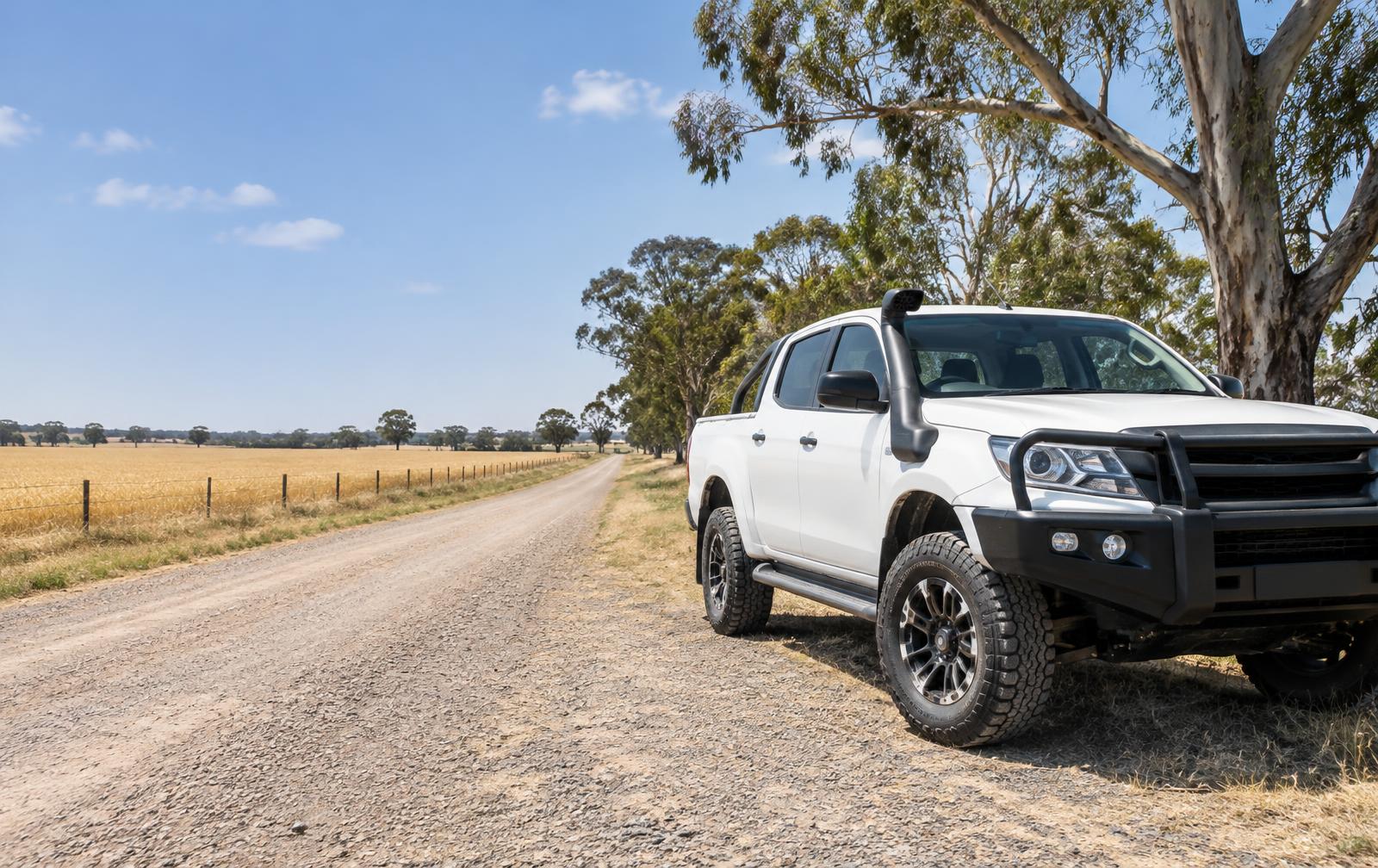
A highway run, a gravel shortcut and the last few kilometres down a farm lane: country driving rarely sticks to one surface. Around Corowa, Balldale and Berrigan, that raises a practical question — do you leave your tyres alone, or let some air out?
Start with your vehicle, not someone else’s PSI
The tyre placard, often in a door opening, and the owner’s manual are your starting point. Front and rear recommendations may differ, and some vehicles list separate pressures for a full load. Use the guidance that matches your vehicle and its actual use.
A mate’s ute may have a different tyre size, construction, load or suspension setup. Its pressures are not a reliable setting for your car. The maximum pressure printed on a tyre sidewall is not a substitute for the vehicle’s recommended operating pressure.
Check cold, before the kilometres add up
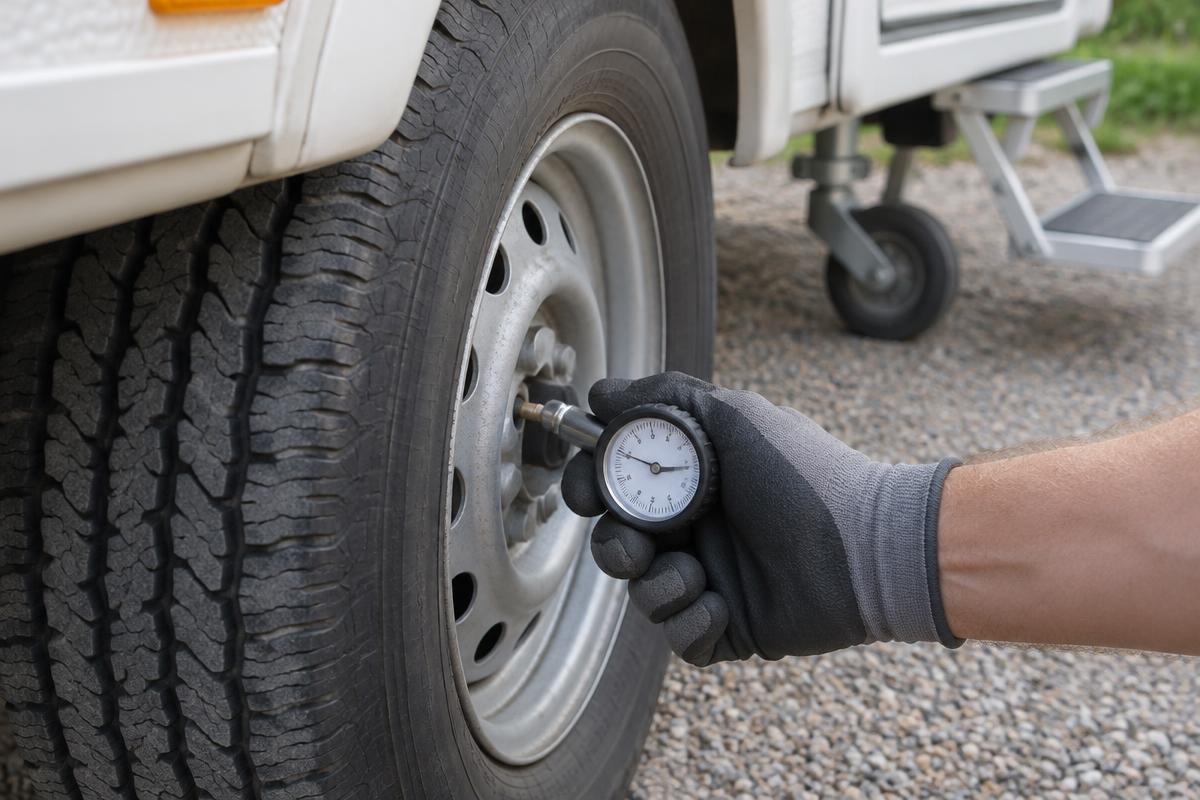
Check pressures before driving, when the tyres are cold, with a reliable gauge. Driving warms tyres and raises the reading. Letting air out of warm tyres just to reach the cold placard number can leave them underinflated once they cool.
For a Christmas drive from Corowa to see family, make this part of the packing routine rather than a rushed stop halfway along the highway. Check the spare too; a flat spare will not help on a quiet country road.
Corrugations are not a reason to guess
Some 4WD off-road situations call for adjusted pressures, but the right approach depends on tyre construction, speed, surface and weight. Lowering pressure reduces a tyre’s load-carrying margin and can increase heat and damage risk if the vehicle is driven too fast or heavily loaded.
For everyday travel on maintained gravel roads, do not assume you must air down. Slow to suit the conditions, leave extra stopping distance and avoid abrupt braking or steering. If regular rough-road work is part of your driving, ask for advice specific to your tyres and vehicle.
A loaded ute or caravan changes the question
Tools, camping gear, passengers and towing all change what your tyres need to support. Check the vehicle’s loaded-pressure guidance and stay within its load limits. A caravan or trailer has its own tyre and load requirements; do not simply give it the same pressures as the tow vehicle.
Before a long towing trip, confirm the correct tyre size, load rating and pressure guidance for the combination. Bring those details when you call the Corowa team so the advice is about your setup, not a generic number.
Back on bitumen? Reset before highway speed
If you have made manufacturer-supported pressure changes for off-road driving, restore the recommended road pressures before travelling at highway speeds. Carry a suitable gauge and compressor when your trip requires pressure changes.
After rough sections, look for cuts, bulges and new vibration or pulling. Repeated air loss needs investigation, not repeated top-ups. A puncture assessment or wheel check can identify whether there is damage that needs attention.
Your questions, answered.
What PSI should I use on gravel roads?+
There is no universal gravel-road PSI. Start with the cold-pressure guidance for your vehicle and load, and seek vehicle- and tyre-specific advice before making off-road adjustments.
Do all-terrain tyres mean I can drive faster on gravel?+
No. A suitable tyre does not remove the loss of traction on loose surfaces. Drive to the road, visibility and weather conditions.
Should I lower tyre pressure in hot weather?+
Do not release air from hot tyres just to match a cold placard figure. Check and set pressures when cold, following the vehicle manufacturer’s guidance.