












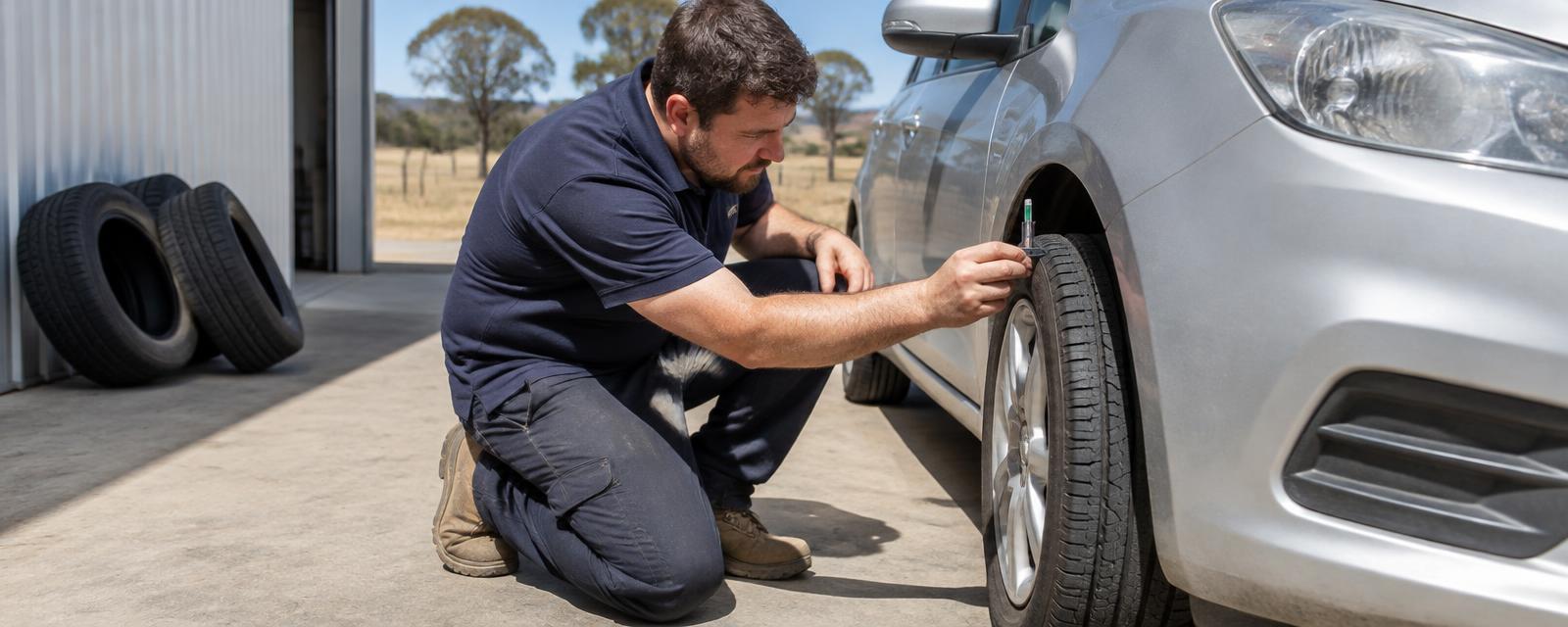
Between highway runs to Albury, gravel roads out to Balldale and hot Riverina summers, tyres around Corowa work hard. Here’s how to tell when yours are due for replacement.
Check your tread depth
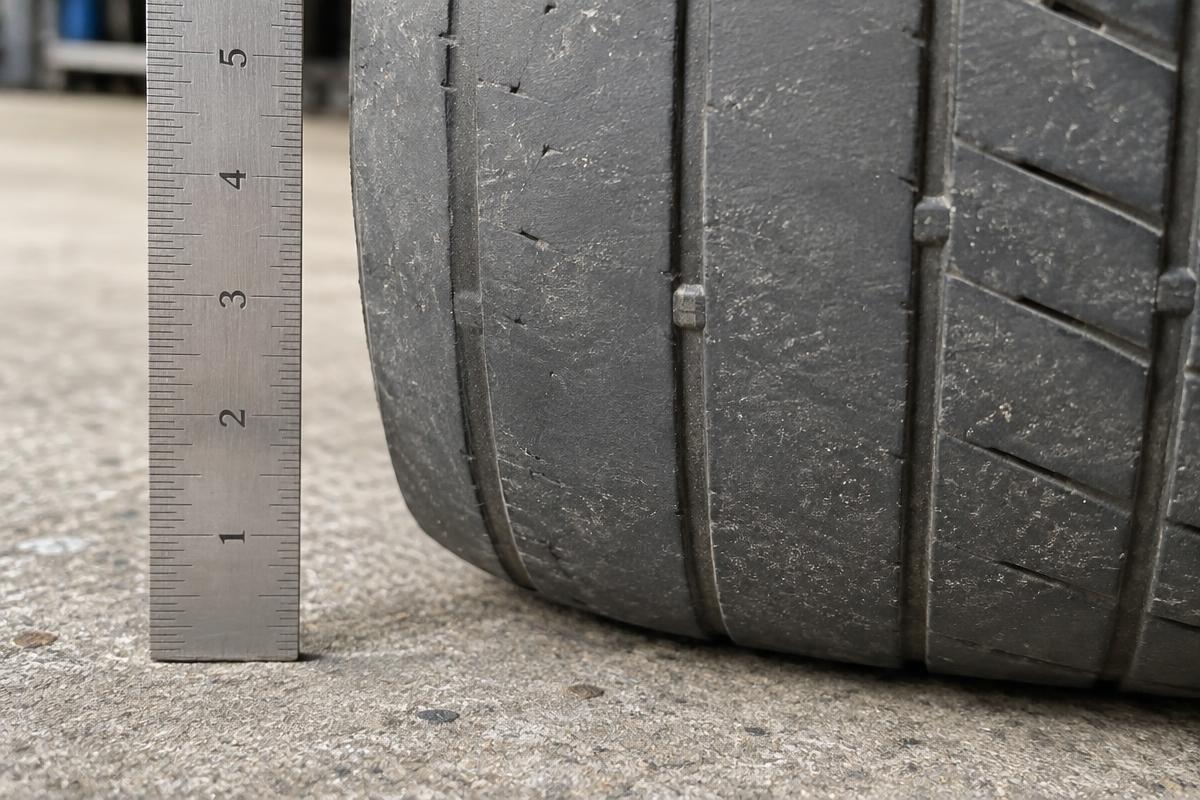
In Australia the legal minimum tread depth for passenger tyres is 1.5 mm across the tread. Most tyres have tread wear indicators — small raised bars in the grooves. When the tread is level with those bars, it’s time to replace the tyre.
Wet-weather grip drops well before the legal limit, so if you regularly drive in the rain or on dirt roads, consider replacing earlier.
Look at the tyre’s age
Rubber hardens over time, even on tyres with plenty of tread — common on caravans, trailers and farm vehicles that sit for long periods. The four-digit DOT code on the sidewall shows the week and year of manufacture (for example 2321 means week 23 of 2021).
Ask us to inspect any tyre that is several years old, especially if it’s on a caravan or trailer.
Watch for cracks, bulges and uneven wear
Sidewall cracking, bulges or cuts are signs a tyre may be unsafe. Uneven wear — heavier on one edge, or patchy “cupping” — often points to wheel alignment, balancing or suspension issues.
Fixing the cause with a wheel alignment helps your next set of tyres last longer.
Notice how the car feels
Vibration through the steering wheel, pulling to one side or more road noise than usual can all signal tyre or wheel problems. Don’t ignore them — a quick check is cheaper than a blowout on the Riverina Highway.
Common questions
What is the legal tread depth in NSW and Victoria?
The minimum is 1.5 mm across the tread for passenger vehicles. Tread wear indicators in the grooves show when you’ve reached it.
Should I replace tyres in pairs?
Replacing tyres in pairs on the same axle keeps grip and handling even. Call us to talk through what suits your vehicle.